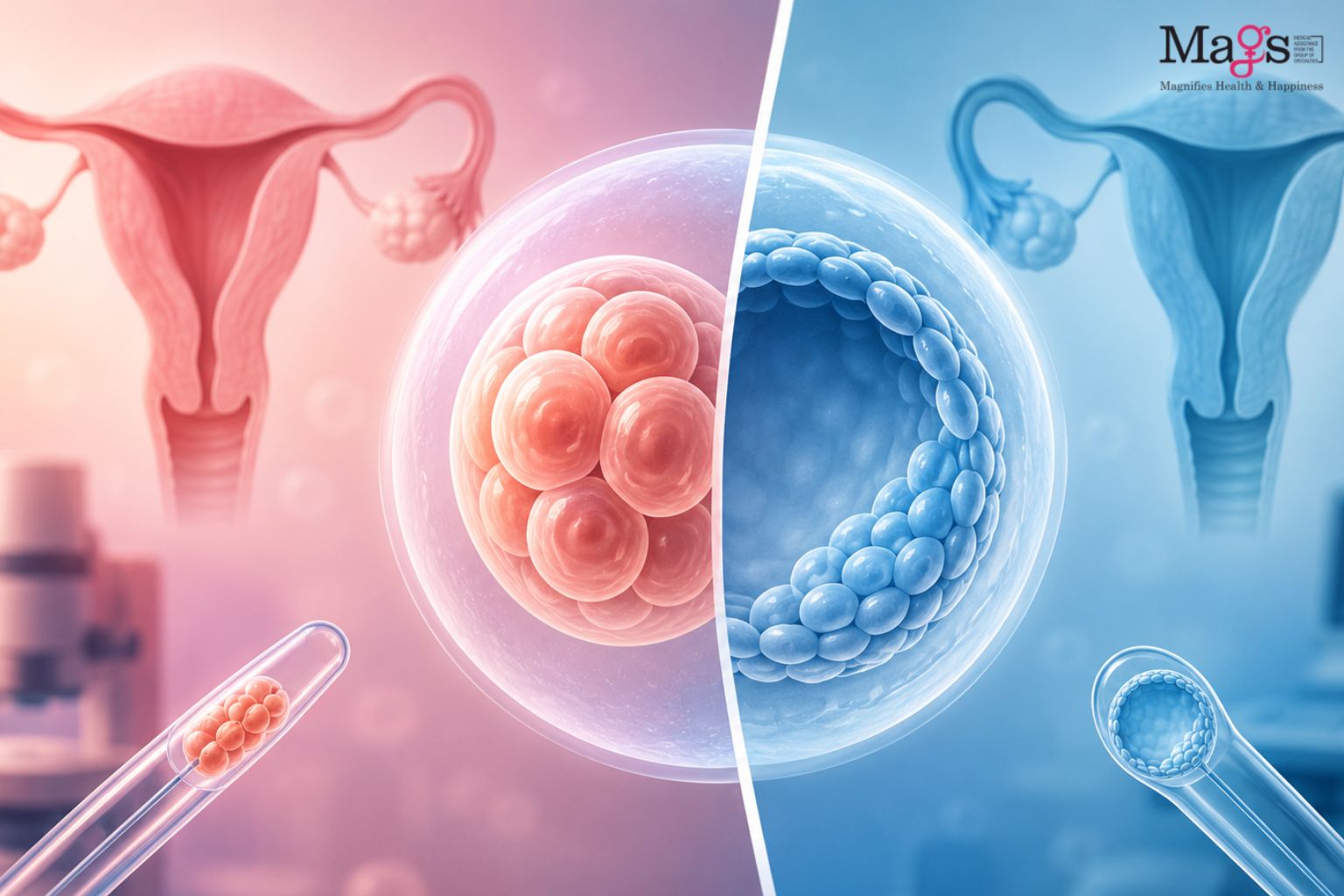
When navigating fertility treatments, one of the most crucial decisions made in the embryology laboratory is deciding when to transfer the embryo into the uterus.
During an In-Vitro Fertilization (IVF) cycle, after eggs are retrieved and fertilized, the resulting embryos are monitored as they divide and grow. Patients often ask whether it is better to perform a Day 3 embryo transfer (cleavage stage) or wait until a Day 5/6 blastocyst transfer.
At MAGS IVF, a premier ivf clinic in kolkata, we believe in empowering our patients with clear, scientific insights so you can feel confident at every step of your fertility treatment. Here is everything you need to know about Day 3 vs. Blastocyst embryo transfers.
Understanding the Stages of Embryo Development
To understand the difference between the two transfer timings, it helps to look at how an embryo develops inside the lab:
- Day 3 (Cleavage Stage): At this point, the fertilized egg has divided into approximately 6 to 8 cells. The embryo’s own genes are just beginning to activate.
- Day 5/6 (Blastocyst Stage): By Day 5 or 6, the embryo has grown rapidly into a complex structure of 100+ cells called a blastocyst. It now has two distinct cell layers:
- An inner cell group (which forms the fetus).
- An outer cell layer (trophectoderm, which forms the placenta).
In natural conception, an embryo actually travels down the fallopian tube and reaches the uterus around Day 5 as a blastocyst. Therefore, a Day 5 transfer closely mimics the natural timing of implantation.
Blastocyst Transfer (Day 5/6)
Key Advantages
- Higher Implantation Rates: Not all Day 3 embryos have the genetic potential to reach Day 5. Extended culture acts as a natural selection tool, allowing embryologists to select the strongest, most viable embryos for transfer.
- Better Synchronization with the Uterus: Receptive uterine lining timing aligns naturally with a blastocyst, supporting smoother implantation.
- Ideal for Single Embryo Transfer (eSET): Because blastocysts have a higher individual chance of success (often 40% to 60% per transfer depending on age), doctors can transfer a single embryo, minimizing the risk of high-risk multiple pregnancies (twins/triplets).
- Enables Genetic Testing (PGT): Preimplantation genetic testing for chromosomal health requires a trophectoderm biopsy, which can only be safely performed at the blastocyst stage.
Potential Risks
- Risk of Laboratory Arrest: If a patient has a low egg count or very few embryos on Day 3, extending culture to Day 5 carries a small risk that none of the embryos reach the blastocyst stage, leaving no embryos for transfer.
Day 3 Embryo Transfer (Cleavage Stage)
Key Advantages
- Protects Embryos with Lower Yield: If you have 1 to 3 embryos on Day 3, placing them into the natural maternal environment early may be safer than exposing them to lab culture conditions.
- Ensures a Transfer Occurs: For patients who have experienced embryo arrest in past lab cycles, Day 3 transfer provides an opportunity for implantation in vivo.
Potential Disadvantages
- Lower Individual Implantation Probability: Because Day 3 embryos are selected based solely on visual appearance rather than developmental stamina, individual implantation success rates are lower compared to blastocysts.
- Higher Multiple Pregnancy Risk: Clinics often transfer two or more Day 3 embryos to increase pregnancy odds, raising the chance of carrying twins.
Day 3 vs. Blastocyst Transfer: At a Glance
Feature | Day 3 Embryo Transfer | Day 5/6 Blastocyst Transfer |
Developmental Stage | Cleavage stage (6–8 cells) | Blastocyst stage (100+ cells) |
Natural Timing Alignment | In fallopian tube stage | Natural uterine arrival stage |
Selection Precision | Moderate (visual grade) | High (developmental stamina) |
Implantation Rate per Embryo | ~20% – 30% | ~40% – 60% |
Genetic Testing (PGT) | Not recommended | Ideal stage for biopsy |
Best Suited For | Fewer eggs/embryos, past lab arrest | Multiple good embryos, single embryo transfer |
How MAGS IVF Recommends the Right Choice
There is no single “best” approach for everyone. The choice between a Day 3 or Day 5 transfer depends on your unique reproductive health history.
At MAGS IVF, our expert team evaluates several personal factors before making a recommendation:
- Total Number of Quality Embryos on Day 3: Patients with 4 or more top-grade embryos usually benefit significantly from blastocyst culture.
- Age and Ovarian Reserve: Maternal age and egg quality help predict how embryos will perform during extended lab culture.
- Previous IVF Outcome History: If past Day 3 transfers have failed, shifting to blastocyst culture can serve both a treatment and diagnostic purpose.
- Advanced Lab Infrastructure: Blastocyst culture requires state-of-the-art culture media, precision incubators, and experienced embryologists—all of which are cornerstones of care at our ivf clinic in kolkata.
Consult the Specialists at MAGS IVF
Whether you are starting your first IVF cycle or seeking a second opinion after previous failed attempts, personalized medical care makes all the difference.
As a trusted ivf clinic in kolkata, MAGS IVF combines compassionate patient care with cutting-edge embryology techniques to help you achieve your dream of parenthood.