For many couples, In Vitro Fertilization (IVF) offers hope after months or even years of trying to conceive. However, one of the most common questions fertility specialists hear is, “What are our chances of success?”
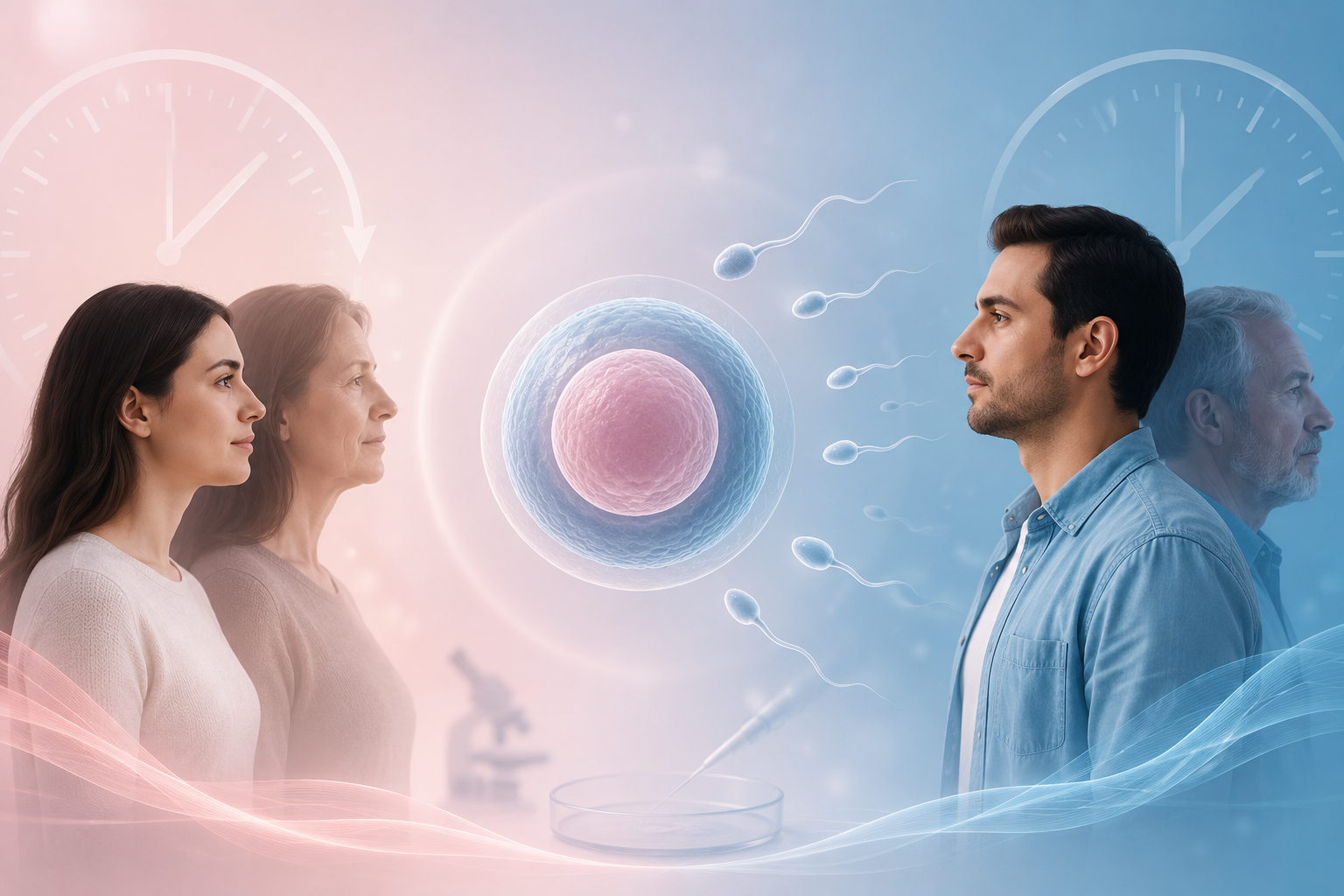
The answer depends on several factors, but age remains one of the strongest predictors of IVF success. While much attention is often given to a woman’s age, the age of the male partner also plays an important role in embryo quality and pregnancy outcomes.
Understanding how age affects fertility, embryo development, and implantation can help couples make informed decisions and seek timely medical guidance.
Why Age Matters in IVF
Fertility naturally changes with age. As men and women grow older, the quality of their reproductive cells declines, although the timeline and degree of decline differ between the sexes.
Successful IVF depends on several interconnected factors, including:
- Egg quality and quantity
- Sperm quality
- Embryo quality
- Uterine health
- Overall medical condition
- Lifestyle factors
Among these, age significantly influences the first three.
How Female Age Affects IVF Success
Women are born with a fixed number of eggs. Over time, both the number (ovarian reserve) and quality of these eggs gradually decrease.
Under 35 Years
Women below 35 generally have:
- Better ovarian reserve
- Higher-quality eggs
- Greater chances of producing healthy embryos
- Lower risk of chromosomal abnormalities
As a result, IVF success rates are generally highest in this age group.
Between 35 and 37 Years
Fertility begins to decline more noticeably.
Although many women still achieve successful pregnancies through IVF, doctors may recommend early evaluation and treatment if conception has not occurred after six months of trying.
Between 38 and 40 Years
Egg quality declines at a faster rate.
This may lead to:
- Fewer mature eggs during stimulation
- Lower fertilization rates
- Reduced embryo quality
- Increased miscarriage risk
Individual outcomes can still vary depending on ovarian reserve and overall reproductive health.
Above 40 Years
After 40, the decline in egg quality becomes more significant.
Challenges may include:
- Lower implantation rates
- Higher chances of chromosomal abnormalities
- Increased likelihood of IVF cycle cancellation due to poor ovarian response
However, many women still achieve pregnancy with personalized treatment plans, and in some cases, additional reproductive options may be discussed based on clinical findings.
Does Male Age Affect IVF Success?
Yes. Although men continue producing sperm throughout life, sperm quality also changes with age.
Men above 40 or 45 years may experience:
- Reduced sperm motility
- Increased DNA fragmentation
- Lower sperm morphology
- Reduced fertilization potential
Poor sperm DNA quality may affect embryo development and can increase the risk of miscarriage or unsuccessful implantation.
This is why fertility specialists routinely evaluate both partners rather than focusing only on female fertility.
The Role of Embryo Quality
A healthy embryo is one of the strongest predictors of IVF success.
Embryo quality depends largely on:
- Egg quality
- Sperm quality
- Laboratory conditions
- Fertilization process
Higher-quality embryos have a better chance of implanting successfully and developing into a healthy pregnancy.
Modern IVF laboratories use advanced embryo grading systems to identify embryos with the greatest developmental potential.
Does Transferring More Embryos Increase IVF Success?
Many couples assume that transferring multiple embryos automatically improves pregnancy chances.
In reality, the decision is more complex.
The number of embryos transferred depends on factors such as:
- Female age
- Embryo quality
- Previous IVF history
- Risk of multiple pregnancy
- National and international clinical guidelines
For younger women with high-quality embryos, transferring a single embryo often provides excellent pregnancy rates while reducing the risks associated with twins or higher-order multiple pregnancies.
In selected cases, doctors may recommend transferring more than one embryo based on individual medical circumstances.
The goal is not simply achieving pregnancy but achieving a healthy singleton pregnancy whenever possible.
Other Factors That Influence IVF Success
Age is important, but it is only one part of the picture.
Other factors include:
Ovarian Reserve
Tests such as AMH (Anti-Müllerian Hormone) and antral follicle count help estimate the number of eggs remaining.
Uterine Health
Conditions like fibroids, polyps, adenomyosis, or untreated infections may affect implantation.
Lifestyle
Healthy lifestyle choices can positively influence fertility outcomes.
These include:
- Maintaining a healthy weight
- Avoiding smoking and excessive alcohol
- Managing stress
- Eating a balanced diet
- Following medical advice consistently
Underlying Medical Conditions
Hormonal disorders, endometriosis, thyroid disease, diabetes, and polycystic ovary syndrome (PCOS) may influence treatment success and often require careful management before IVF.
Can IVF Success Be Improved?
While age cannot be changed, several steps may improve the chances of success:
- Seek fertility evaluation early if pregnancy is delayed.
- Follow individualized treatment protocols.
- Optimize nutrition and overall health before treatment.
- Complete recommended fertility investigations.
- Attend regular follow-up appointments.
- Discuss embryo transfer strategies with your fertility specialist.
Every fertility journey is unique, and treatment plans should always be personalized rather than based solely on age.
When Should You Consult a Fertility Specialist?
You should consider consulting a fertility expert if:
- You are below 35 and have been trying to conceive for one year without success.
- You are above 35 and have been trying for six months.
- You have irregular menstrual cycles.
- You have experienced recurrent miscarriages.
- There is a known male fertility concern.
- You have previously undergone unsuccessful fertility treatments.
Early assessment can help identify underlying issues and guide appropriate treatment options.
Final Thoughts
Age significantly influences IVF success, but it is not the only factor that determines the outcome. Both female and male reproductive health contribute to embryo quality, implantation, and the chances of a successful pregnancy.
Advances in reproductive medicine now allow fertility specialists to develop individualized treatment strategies based on each couple’s unique medical profile. Seeking timely evaluation and understanding the factors that influence IVF can help couples make informed decisions and improve their chances of building a family.
If you’re considering treatment at an IVF clinic in Kolkata, consulting experienced fertility experts can help you understand your individual fertility profile and the treatment options best suited to your situation. Whether you are exploring infertility treatment in Kolkata for the first time or seeking guidance after previous treatment attempts, an evidence-based, personalized approach remains the cornerstone of successful care from experienced IVF specialists in Kolkata.